Key Points from CROSS Safety Bulletin 1403
A warning we must not ignore
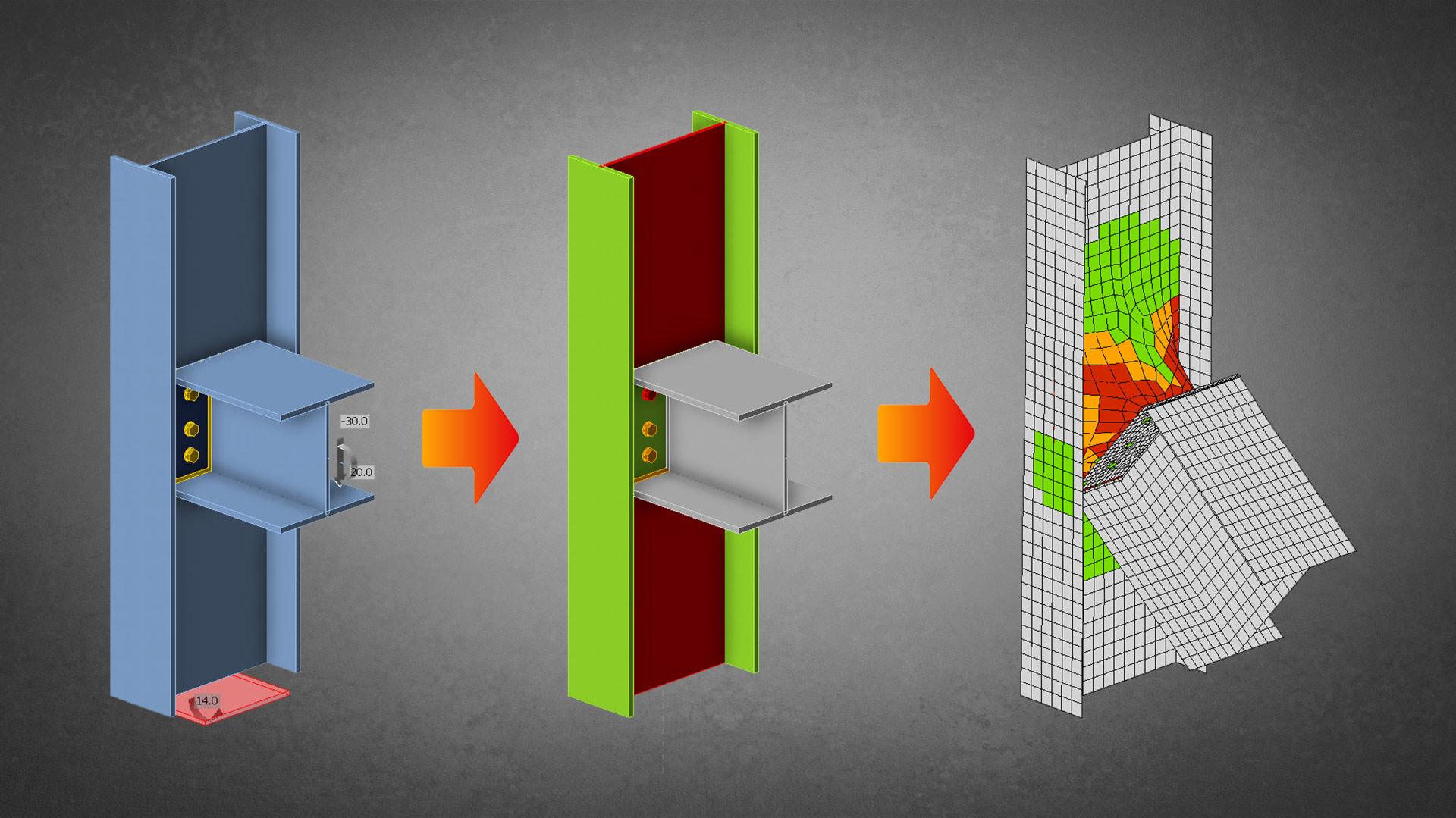
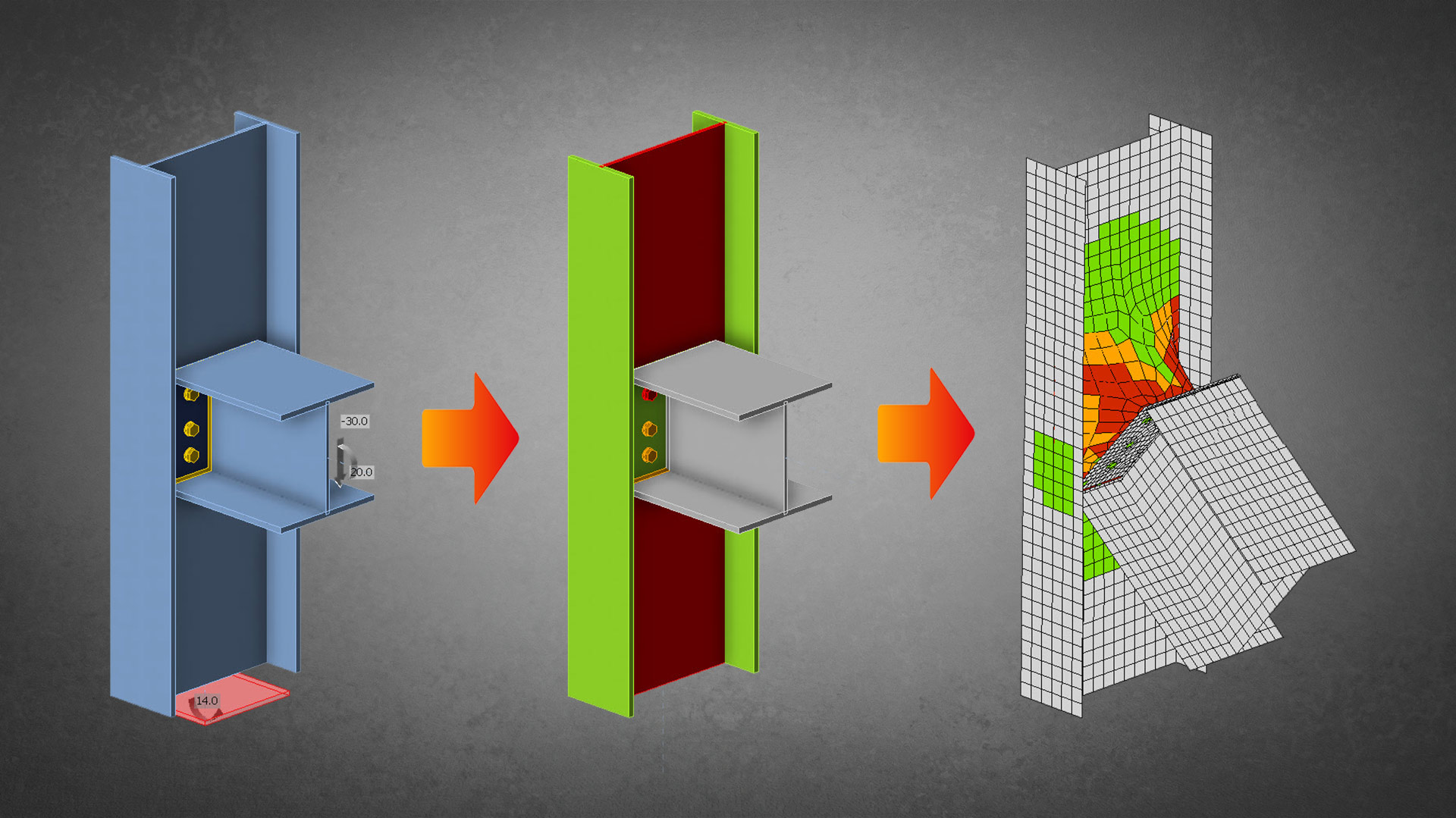
In a recent CROSS safety report (ID 1403), a static calculation was discovered where the moment connection between a UB beam and a UC column was made via the column flange, rather than the web. This design choice significantly increases the risk of web buckling and larger bending moments in the beam. Such errors often stem from the use of generic software libraries, a lack of verification, or insufficient modeling of connection stiffness – and above all, a lack of structural understanding.
Result?
A flexible joint that allowed more rotation than anticipated, causing higher bending moments in the beam – and a real risk to structural safety.
How did that happen?
The report reveals a number of issues that are familiar to many engineers:
- The design team relied on software library Which She did not have the correct type of connection..
- The “good enough” method was used without fully modeling the joint stiffness.
- The column grid deformed more than expected, invalidating the beam design assumptions.
The lesson is clear: The joint design cannot be approximated. – and the software must support the correct geometric complexity with proper verification and without compromise.
Where IDEA StatiCa makes a difference
At IDEA StatiCa, we believe that joint design must go beyond selecting from pre-set templates. Our software allows structural engineers to model the exact geometry, loads, and boundary conditions, to calculate how much rotational flexibility or stiffness is present, and to assess whether the joint truly behaves as assumed.
This way, you can proactively catch cases where the connection alone will not provide the necessary performance, and adjust your design (e.g., adding reinforcement, rerouting the connection to a rib, choosing a more capable connection type) before the structure goes into prefabrication.
Adoption verified Early modeling also ensures good communication between the main structural designer and the connection designer (sharing loads, assumptions, model geometry), and we can drastically reduce the chances of falling into the types of traps that CROSS has identified. The cost of solving problems during the shop drawing phase or later is much higher than investing a little more time in early-stage modeling.
Usage IDEA StatiCa I can help you eliminate those risks:
✅ Complete freedom of geometry
Model the actual connection you need – not just what the library offers.
✅ Verified capacity & rigidity
Check rotation, deformed shape, and stiffness using the proven CBFEM method, revealing mesh deformations, bolt forces, and stress concentrations.
✅ Transparent communication
Share exact models and load assumptions among collaborators and manufacturers – so everyone knows what the connection is actually doing.
Call to action
CROSS reminds us that Connections weak link.
The right tools – and the discipline to use them – turn that weak link into an advantage.
If you are designing steel structure connections, ask yourself:
- Am I modeling the real stiffness of my joints?
- Or do I rely on the given template and hope it's “close enough”?
Discover how IDEA StatiCa reveals hidden risks before prefabrication.
Download the free demo/trial version Contact us for assistance. Fill out the form and we will contact you soon.
Source: https://ideastatica.uk/when-connection-design-goes-wrong/
This article was translated and published with permission from the source.